For years, organizations invested in public relations for a fairly straightforward reason: visibility.
Get quoted in the news. Build credibility. Establish executives as experts. Make sure the right audiences know who you are.
That still matters.
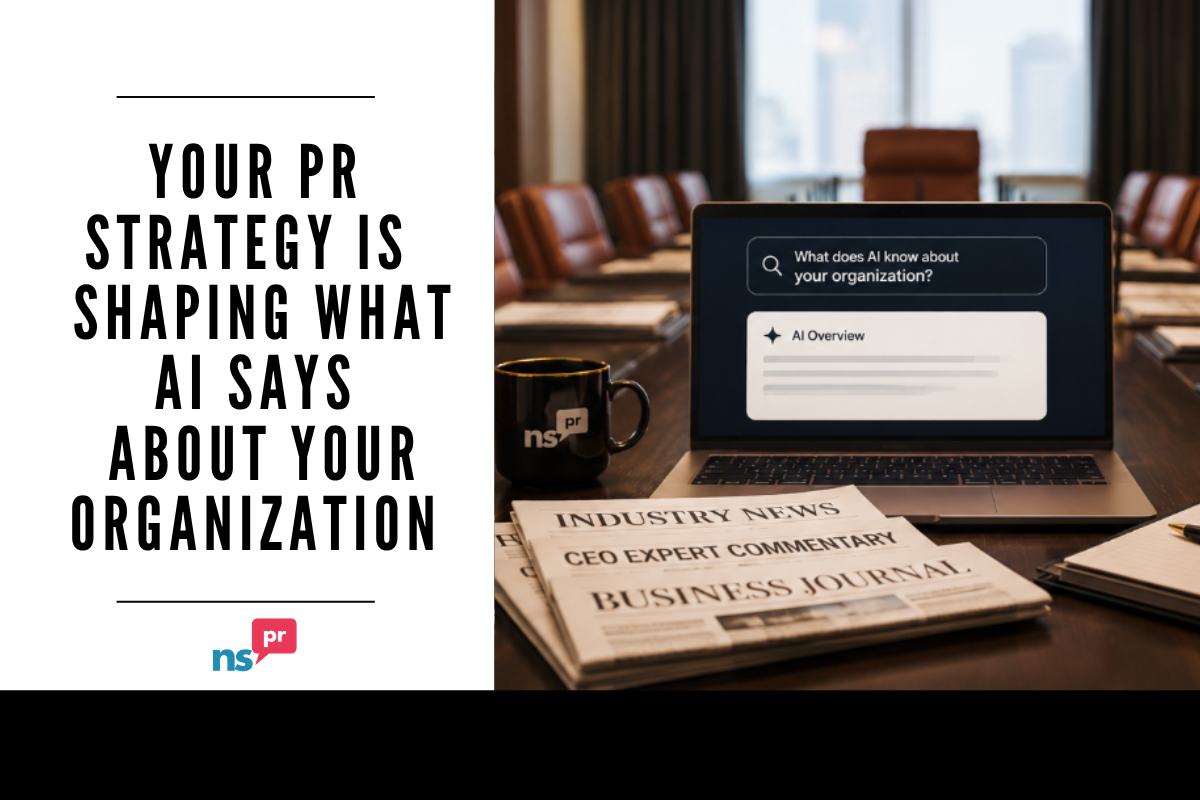
But now, earned media is doing something else that many organizations haven’t considered yet: helping shape what artificial intelligence knows and says about them.
As consumers, journalists, potential employees, board members, donors and business leaders increasingly use tools like ChatGPT, Gemini, Claude and Perplexity to research organizations and executives, the information available about your brand online matters differently.
Someone may no longer Google:
“Who are the leading credit unions in my market?”
They may ask AI:
“What credit unions are doing innovative work in financial inclusion?”
“Who are the leading experts in behavioral healthcare?”
“What nonprofit organizations are addressing this issue?”
“Who are credible experts I should interview about this topic?”
Increasingly, public relations can influence those answers.
Earned Media Has a Longer Life Than Ever
Recent research from Muck Rack found that 84% of citations appearing in AI-generated answers come from earned media sources.
That should get the attention of every communications and executive team.
A strong media placement has traditionally delivered credibility, visibility and third-party validation.
Now it can potentially do more.
The article featuring your CEO today may become one of the sources AI systems encounter when answering questions about your industry months from now.
The expert commentary you provide to a journalist can reinforce your executive’s association with an important issue.
The announcement containing meaningful data about your organization creates another credible piece of information about your work.
PR is no longer simply about winning today’s news cycle.
It is about building a credible public record.
This Makes Thought Leadership More Important, Not Less
AI has made it incredibly easy to produce content.
It has not made it easy to manufacture authority.
There is a significant difference between publishing 20 articles saying your CEO is an expert and having respected journalists independently turn to that CEO for insight.
That third-party validation has always been one of the greatest advantages of earned media.
In an AI-driven information environment, it may become even more valuable.
Organizations should be asking:
What do we want our leaders to be known for?
Then communications teams need to consistently build evidence supporting that positioning.
That can include media interviews, contributed commentary, original research, speaking opportunities, LinkedIn thought leadership, video, organizational content and expert analysis tied to breaking news.
One placement isn’t a thought leadership strategy.
Repeatedly demonstrating expertise is.
LinkedIn Matters Too
There is another interesting development happening.
Recent AI visibility research from Meltwater found LinkedIn citations increased nearly 68% in July alone.
That doesn’t mean every CEO needs to start posting three times a day.
It means executive communications can no longer exist in separate boxes.
Media relations over here.
LinkedIn over there.
Executive positioning somewhere else.
They should reinforce one another.
When an executive provides commentary to a national publication, that interview can become the foundation for a LinkedIn discussion.
When an organization releases new research, it can become a media pitch, executive commentary, social content and a resource on the organization’s website.
When a major news story breaks within your area of expertise, your communications team should already know who can speak about it and what perspective that person brings.
Each piece builds upon the others.
Reputation Management Is Changing Too
There is also another side to this.
Organizations need to pay attention not only to whether they appear in AI results, but how they appear.
What happens when someone asks an AI platform about your CEO?
Your organization’s reputation?
A past controversy?
Your position on an industry issue?
Your competitors?
The answer will depend heavily on the information available for the system to find and interpret.
You cannot completely control that answer.
Nor should you try.
But organizations can make sure there is a strong, credible and accurate body of information available about who they are, what they do and what their leaders stand for.
That is reputation management.
And increasingly, it is also AI visibility.
The Organizations That Utilize This Will Have an Advantage
The communications landscape is changing quickly, but the fundamentals haven’t disappeared.
Credibility still matters.
Journalists still matter.
Expertise still matters.
Consistency still matters.
The difference is that the audience consuming that information is changing.
Sometimes it is a person reading an article.
Sometimes it is a journalist researching a source.
Sometimes it is an AI platform assembling an answer.
Strong public relations increasingly has to reach all three.
At National Strategies Public Relations, we help organizations build visibility and protect their reputations through earned media, executive positioning and strategic communications.
Because today, being part of the conversation isn’t enough.
You need to be part of the information people trust.