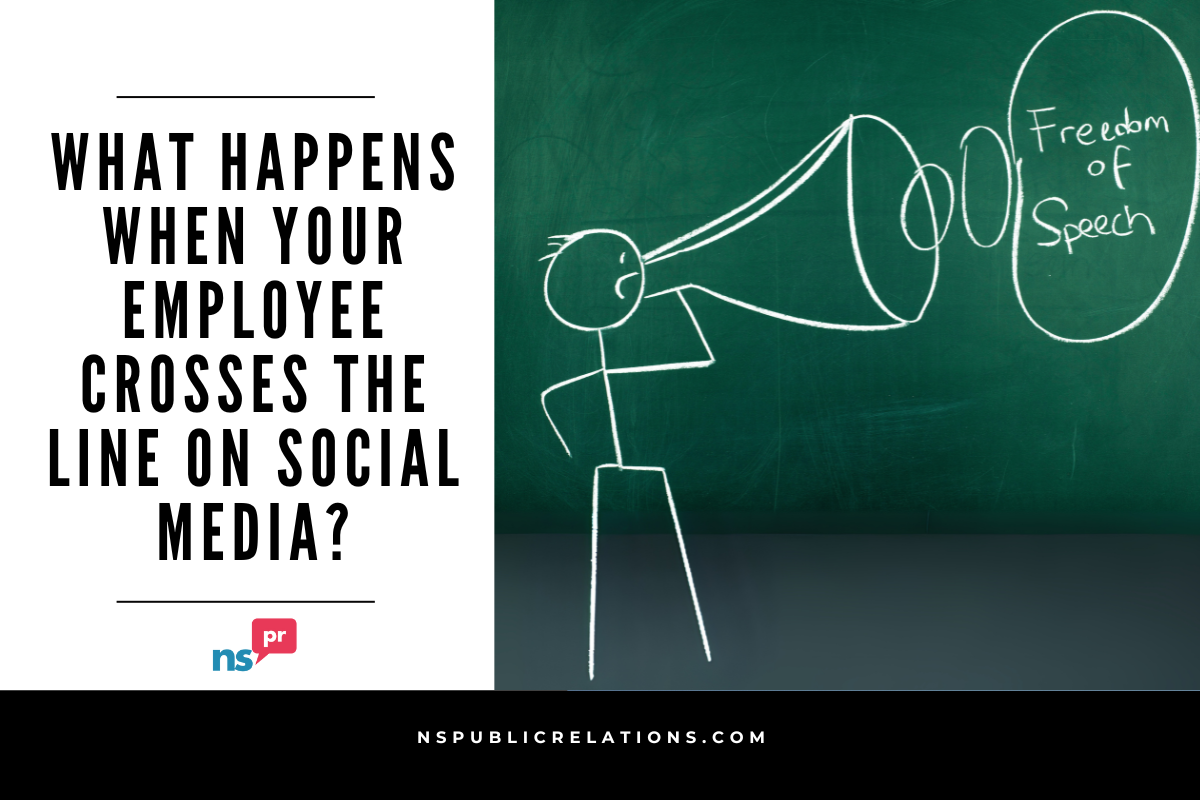
When Employees Cross the Line: What Businesses Must Learn from Recent Events
In the wake of recent events, we’re witnessing a surge of employees across sectors—media, public agencies, private companies—being disciplined, placed on leave, or fired for their public remarks. Some applauded or minimized the violence. Others shared opinions so inflammatory they couldn’t be ignored. These aren’t theoretical situations anymore; they’re real crises unfolding companies’ reputations in real time. CBS News+2Business Insider+2
Why This Matters Now
Violence rooted in political or ideological differences has horrifying consequences. When someone publicly expresses hate—or worse, celebrates violence—against a political or religious figure, it draws a clear line: you’re not just voicing an opinion; you’re contributing to a poisonous climate. That matters to your brand, stakeholders, and your culture.
In moments like these, the public rarely considers disclaimers like “I’m off duty” or “I didn’t list my employer.” Once a connection is made by social observers or news outlets, the company becomes part of the story.
“The issue isn’t just what an employee said—it’s whether your company’s values show up in your response. People want to see if you live by the standards you claim, or if they’re just words on a wall.”
That’s why leadership can’t hide behind technicalities. Impact matters. Damage to trust, internal upset, public backlash—those are the signals to act.
Quick Take: What Businesses Must Do When Employees Cross the Line Online
Recent etc. remind us that hateful or violent rhetoric online can have real-world implications. Here are four actions businesses cannot afford to skip:
- Don’t Ignore It – Silence looks like complicity.
- Don’t Minimize It – A social media post celebrates violence? You’re already in the narrative—no matter the time stamp.
- Don’t Delay – Even a short holding statement (“We are aware, investigating, and taking values-based steps”) matters.
- Don’t Be Inconsistent – You’re judged by how you apply consequences across employees.
What Should Employers Do?
When someone in your organization crosses the line publicly—hate speech, threats, or celebrating violence—here’s how to respond thoughtfully, fairly, and in line with your culture.
| Situation | Recommended Employer Action |
|---|---|
| Overt hate speech or celebration of violence | Termination may be necessary. These behaviors cross non-negotiable lines. |
| Offensive language that doesn’t explicitly violate policy | Consider corrective action (warning, training) and reaffirm public values. |
| Political opinion or controversy not tied to violence or hate | Tread carefully. You may still intervene with coaching or policy delineation, depending on broader reputational impact. |
In all cases, process and values matter more than the outcome. A fair, transparent process builds trust. Acting in keeping with your stated values builds credibility.
“Discipline alone isn’t the measure of leadership. The real test is whether an organization uses the moment to reinforce its culture, show accountability, and prove that its values aren’t just words.”
Gaps That Keep Resurfacing
Across these incidents, the same flaws keep coming up:
- Messaging Gap – Companies lean on sanitized or legalistic language, missing the chance to demonstrate empathy and values.
- Policy Gap – HR rules often stop at workplace conduct, ignoring how off-duty actions can still harm company reputation.
- Monitoring Gap – Too often, organizations don’t track public commentary by employees until it becomes a firestorm.
- Alignment Gap – Brands preach integrity publicly while being lax internally. That hypocrisy gets called out fast.
Leadership Checklist: Handling Employee Misconduct Online
- Define the line clearly – Your code of conduct and social media policies must outline what’s unacceptable—even off duty.
- Assess the real-world impact – Did the post spark backlash, employee distress, or media linking to your brand?
- Respond with speed and principle – Issue a values-based statement; begin HR/legal review immediately.
- Engage your team – Internally affirm your values and support anyone impacted by the behavior or fallout.
- Own the narrative – Monitor social chatter. Speak first and shape the framing—don’t let others define your response.
- Follow through – Actions matter more than words. Roll out training, policy updates, or community initiatives to demonstrate change.
- Audit proactively – A regular de-risk review can catch vulnerabilities before headlines do. Who speaks? What triggers a response? How fast can you act?
The Leadership Imperative
We might not control every word our employees utter online, but we can control how our organizations respond. Hateful or celebratory rhetoric around real violence crosses into public trust territory immediately.
In a tragic moment when someone chose violence over dialogue, businesses need to show that silence is not an option and that values are not optional either. It’s not about controlling every opinion—it’s about responding with integrity when values are tested.
“You can’t control every employee’s voice. But you can control whether your organization chooses silence, or chooses values, when those voices cross the line.”